In a quiet village 60 kilometres from Jowai, the Kotsati-Umlawan cave system stretches over 21 kilometres through Meghalaya's limestone heart—but its future hangs in the balance
By Travel Correspondent Lumshnong Village, West Jaintia Hills
The entrance to Krem Kotsati sits unremarkable in the center of Lumshnong village—just another hole in the limestone. But step inside, and you enter one of Asia's most extraordinary underground labyrinths. During the dry season, you wade through crystal-clear water. During monsoons, the entrance disappears entirely beneath rising floods, sealing shut a 21-kilometre network of passages that took millions of years to carve.
This is the Kotsati-Umlawan cave system—or simply Umlawan Cave to most visitors—where interconnected chambers, underground rivers, and passages weave through the Jaintia Hills like capillaries through stone. For years, it held the title of the longest cave in the Indian subcontinent. Today, though eclipsed by nearby Krem Liat Prah (22 kilometres), it remains one of the region's most spectacular geological wonders.
And one of the most threatened.
A VILLAGE THAT BECAME FAMOUS OVERNIGHT
Lumshnong was once just another village in Meghalaya's cave-riddled landscape. That changed when international caving expeditions in the 1990s and early 2000s began mapping what locals had always known existed beneath their feet.
The breakthrough came when British caver Simon Brooks and his team established connections between multiple cave entrances—Krem Kotsati, Krem Umshor, Krem Umtyongai, and others—revealing they were all part of one massive system. By the time surveyors finished mapping accessible sections, the Kotsati-Umlawan network measured over 21 kilometres in length with a vertical range of 187 metres.
"As per information, the famous Umlawan cave is interconnected," noted early survey reports. "Brooks reached Virgin River in Krem Umlawan and established the Krem Kotsati-Umlawan cave system."
The inconspicuous village suddenly found itself at the center of international caving attention. Tour operators began bringing adventure tourists. Scientists arrived to study the geology and biology. And Lumshnong became synonymous with one thing: caves.
TWENTY-FOUR ENTRANCES TO AN UNDERGROUND WORLD
What makes the Kotsati-Umlawan system extraordinary isn't just its length—it's its complexity. The network comprises at least 24 known entrances, both horizontal and vertical, scattered across the limestone landscape around Lumshnong village.
Each entrance leads into a different section of the maze. Krem Kotsati, the main entrance in the village center, requires swimming during certain seasons. Krem Umlawan, located about 60 kilometres from Jowai, offers easier access and has become the primary tourist entry point. Other caves in the network—Krem Umskor, Krem Umsynrang Liehwait, Krem Wahjajew—remain known primarily to serious cavers and local guides.
"The cave system is a river cave of asymmetric dendritic pattern," explains documentation from the Himalayan Journal. "Its main passages follow underground streams that have been carving these channels for millions of years."
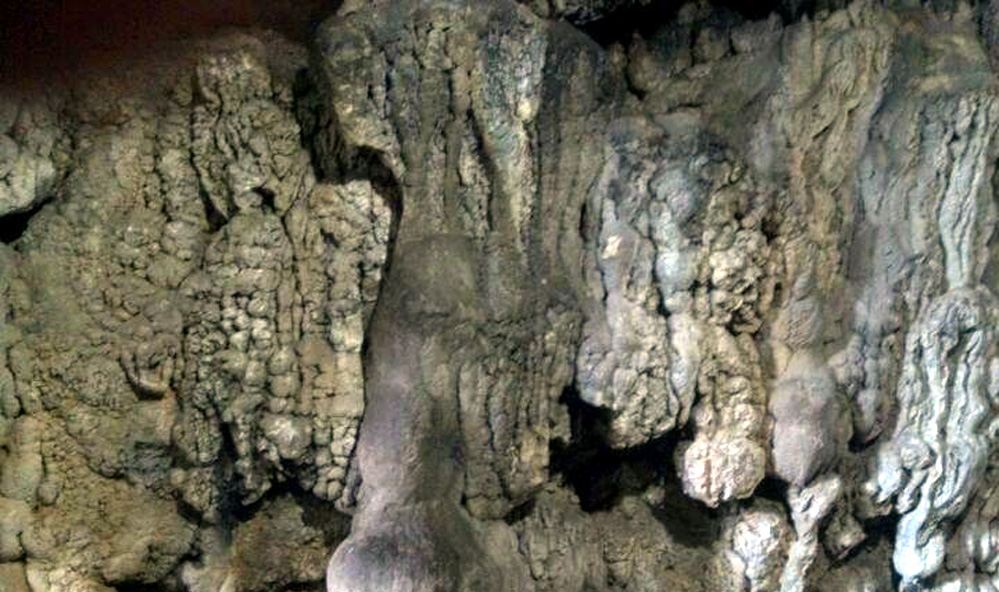
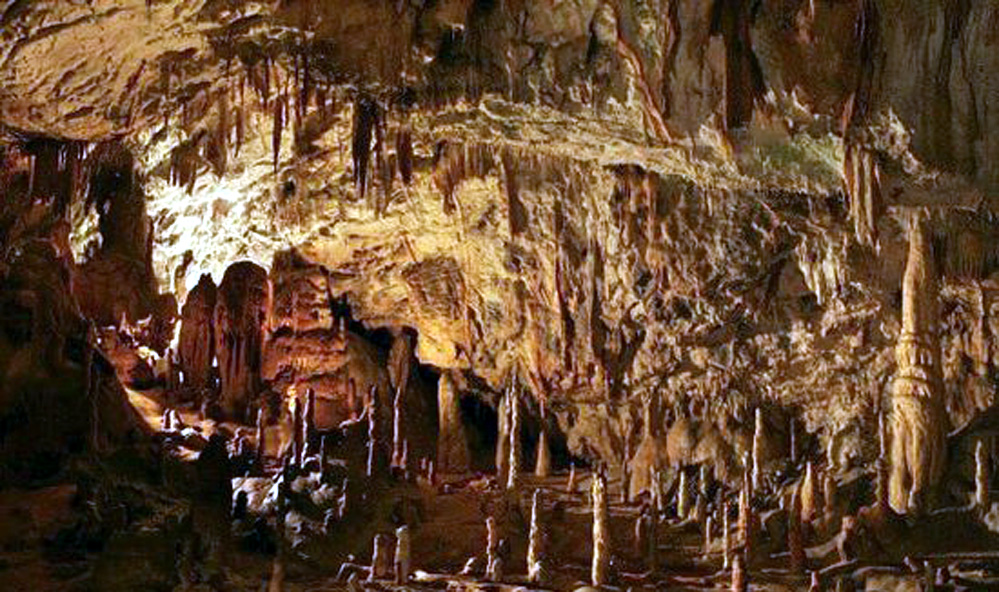
Walk through the accessible sections and you encounter chambers large enough to hold cathedrals, passages so narrow you must crawl, and formations that seem to defy gravity. Stalactites hang like frozen chandeliers. Stalagmites rise like ancient pillars. In some chambers, the two have merged over millennia, creating columns that stretch from floor to ceiling.
"It was a beauty," wrote a Tripadvisor reviewer in 2025. "Enough light inside to see the cave and the rocks. Some of them look like art of Michelangelo and so look like natural animals and kids playing around."
THE GEOLOGY OF TIME
The caves tell a story written in limestone—a narrative that begins millions of years ago when this region lay beneath ancient seas. Marine organisms died and accumulated, their calcium carbonate shells compressing into thick limestone beds. As tectonic forces lifted the land, creating the Meghalaya plateau, slightly acidic rainwater began its patient work.
Drop by drop, year by year, century by century, water seeped through cracks in the limestone. The weak carbonic acid dissolved rock along fracture lines, widening them into passages. Underground streams carved larger channels. Chambers formed where softer limestone eroded faster. And slowly—imperceptibly slowly to human timescales—the caves grew.
Today, the process continues. Water still flows through many passages, still carving, still dissolving, still creating. The formations visitors admire—the stalactites, stalagmites, flowstones, and curtains—represent calcite re-deposited by mineral-rich water dripping through the cave. Each formation grows at a rate measured in millimeters per century.
"The cave boasts an intricate network of subterranean passages, massive chambers, and natural labyrinths formed by the erosive actions of water on limestone," notes recent tourism documentation. "These formations attract a large number of tourists from different places."
The vertical range of 187 metres—the difference between the highest and lowest points in the system—hints at the original landscape before erosion. The cave system essentially preserves a three-dimensional map of how water once flowed through this region, before surface rivers carved the valleys visible today.
THE EXPLORER'S JOURNEY
Visiting Umlawan Cave isn't a casual afternoon outing. From Jowai, the district headquarters, you travel 60 kilometres through winding roads that climb into the Jaintia Hills. The journey passes villages, forests, and eventually Lumshnong—where you'll need to arrange local guides.
Unlike the more developed Mawsmai Cave in Cherrapunji, Umlawan retains its raw, adventurous character. There are no concrete pathways, no permanent lighting, no gift shops. What you get is authentic caving.
The experience varies dramatically by entrance. Enter through Krem Kotsati and you may need to swim—the entrance floods during monsoon and stays partially submerged for months. Choose Krem Umlawan's main entrance and you walk into passages lit by fellow explorers' headlamps, with limestone walls glistening in the artificial light.
"It was a near ten-minute thrilling experience to trek through the cave," wrote one visitor on Tripadvisor. "The inside was well-lit due to a few other travellers carrying torches... These caves have a rockier path than the more popular Mawsmai caves however were much more fun to explore. They have much larger pathways than Mawsmai."
Inside, the cave maintains a constant cool temperature regardless of the season outside. The air smells of damp stone and earth. Water drips from the ceiling—the same dripping that's been building formations for millennia. Your footsteps echo in larger chambers, then disappear into dead silence in tighter passages.
The accessible tourist section covers perhaps a kilometre of walking, enough to give a taste of the system's scale. But beyond lie unexplored passages, chambers no human has seen, rivers flowing through darkness that continues for kilometres more.
"Great adventure," summarized another reviewer simply. The consensus among visitors is clear: come prepared for actual caving, not a sanitized tourist experience, and you'll be rewarded with something genuinely special.
WHEN TO VISIT
Timing a visit to Umlawan Cave requires understanding the region's dramatic monsoon cycle. Meghalaya receives some of the heaviest rainfall on Earth—nearby Cherrapunji and Mawsynram compete for the title of world's wettest place. That rain transforms cave systems from November to June.
Best Season: November to April
This dry season offers optimal conditions. Cave entrances remain accessible. Water levels in underground passages stay manageable. The risk of flash flooding drops significantly. And the weather makes the journey to Lumshnong more comfortable.
"The best time to visit Umlawan Cave is during the dry season, from November to April, when the weather is pleasant for exploring the cave and surrounding areas," advises current travel documentation. "This period also coincides with many local festivals and events, offering a vibrant cultural experience for visitors."
Avoid: Monsoon Season (June-September)
During these months, the Krem Kotsati entrance becomes completely submerged. Other entrances may flood partially. Underground river levels rise rapidly—and unpredictably. What might be a safe passage in the morning can become a raging torrent by afternoon.
Even if the caves themselves remain technically accessible, the journey to reach them becomes treacherous. Roads turn muddy. Landslides block routes. The constant rain makes outdoor activities miserable.
"The entrance is submerged during monsoons," warn multiple sources. "One needs to swim to enter the cave."
THE MINING THREAT
But the biggest threat to Umlawan Cave doesn't come from weather—it comes from industry.
Lumshnong sits in one of Meghalaya's richest limestone deposits. The same geological formations that created the cave system attract cement companies hungry for raw materials. Since the early 2000s, limestone mining has expanded rapidly around the village, transforming the landscape and threatening the very caves that made Lumshnong famous.
In 2005, the International Cement Review published a stark warning: "Factory threat to cave system—India's longest network of underground caves is in danger from a chain of cement factories the Meghalaya government has recently sanctioned."
The threat materialized. By 2021, reports emerged that mining operations had destroyed entrances to at least four caves in the Kotsati-Umlawan system. "At one point, the entrances to 24 caves of the Kotsati-Umlawan caves in the Jaintia Hills were blocked by deposits from limestone quarries," documented environmental advocates.
The documentary film "The Story of Lumshnong," winner of the 2021 Yale Environment 360 Video Contest, examines the impact: "Government officials allowed cement companies to pour into a forest in northeast India, polluting the air and water and destroying an ecosystem on which local villagers depend."
The environmental toll extends beyond the caves themselves. Limestone quarrying generates massive dust pollution. It contaminates water sources. It destroys forest habitat. And once mined, limestone doesn't regenerate—what took millions of years to create disappears permanently.
"Campaigners against mining claimed limestone mining destroyed the famous Krem Kot-Sati Umlawan cave system at Lumshnong," reported The Syllad in 2023, during the 31st International Cave Expedition to the area.
Dr. Herbert Daniel Gebauer, a cave researcher who has studied Meghalaya's caves extensively, notes that the threat isn't theoretical—it's ongoing. "Unfortunately, limestone mining can put biodiversity at risk. A limestone quarry can destroy or disrupt underground caves that are home to numerous species of life."
PLANNING YOUR VISIT
Despite the threats, Umlawan Cave remains accessible to visitors—for now. Here's what you need to know:
Getting There:
- From Shillong: 180 km via Jowai (5-6 hours by road)
- From Guwahati: 220 km via Jowai (7-8 hours by road)
- From Jowai: 60 km to Lumshnong village (2-3 hours)
The final stretch from Jowai to Lumshnong involves narrow, winding roads through hilly terrain. A private vehicle or hired taxi is recommended.
What to Bring:
- Sturdy waterproof footwear (essential—you'll be walking through water)
- Headlamp or torch with spare batteries (cave has no artificial lighting)
- Extra clothing in waterproof bag (you will get wet)
- Water and snacks
- Basic first aid kit
- Camera with good low-light capability (optional)
Entry Requirements:
- Local guide is mandatory
- Can be arranged through Lumshnong village
- Entry fees vary (₹50-100 for Indians, ₹200-300 for foreigners)
- Open 9:00 AM to 5:00 PM daily
Duration:
- Accessible cave section: 1-2 hours exploration
- Add 1-2 hours for travel from parking to cave entrance and back
Where to Stay:
Accommodation options near Umlawan Cave are limited. Most visitors stay in Jowai, the district headquarters:
Jowai (60 km from Umlawan):
- Budget guesthouses: ₹700-1,200/night
- Mid-range hotels: ₹1,500-2,500/night
- Government Circuit House (advance booking required)
Lumshnong Village:
- Basic homestays available through local contacts
- Limited facilities but authentic cultural experience
- Hosts can arrange guides and meals
Estimated Budget (Per Person, 2-Day Trip):
- Transport (Shillong/Guwahati round trip): ₹2,000-3,000
- Accommodation (1 night): ₹800-1,500
- Food: ₹500-800
- Guide and entry fees: ₹200-400
- Miscellaneous: ₹300-500
- Total: ₹3,800-6,200
BEYOND THE CAVE
Lumshnong village and the surrounding West Jaintia Hills offer more than just caves:
Krang Suri Falls Located about 30 kilometres from Lumshnong, these turquoise waterfalls are among Meghalaya's most beautiful. Best visited during dry season when water is crystal clear.
Jarain Pitcher Plant Lake About 40 kilometres away, this unique wetland hosts carnivorous pitcher plants and offers peaceful boat rides.
Other Caves in the Area The Jaintia Hills host dozens of other caves, many still being explored and mapped. Krem Liat Prah, now South Asia's longest at 22 kilometres, lies in the same region. Serious cavers can arrange multi-day expeditions with experienced guides.
Local Villages The Jaintia tribal culture remains strong in this region. Village homestays offer opportunities to experience traditional lifestyles, food, and customs.
CONSERVATION AT A CROSSROADS
The future of Umlawan Cave hinges on choices being made right now. Will Meghalaya prioritize short-term economic gains from limestone mining, or long-term benefits from sustainable tourism and environmental preservation?
Cave tourism, when managed responsibly, generates income for local communities without destroying the resource. Guides from Lumshnong earn livelihoods showing visitors the caves. Homestays provide accommodation. Local shops sell supplies. The economic benefits flow directly to villages, creating incentives for conservation.
Mining, by contrast, enriches distant cement companies while leaving local communities with polluted air, contaminated water, and destroyed ecosystems. Once the limestone is gone, so is any hope of tourism.
"The entire site is considered biodiversity rich, which have threat from limestone mining and cement industries," notes environmental research from the region. The caves harbor unique species found nowhere else—cave-adapted insects, fish, and microorganisms that science has barely begun to catalogue.
International caving expeditions continue visiting Meghalaya, mapping new passages and documenting the systems before they're lost. The 31st International Cave Expedition in 2023 added hundreds of meters of new passages to the known systems. But each year brings reports of new cave entrances blocked, new passages destroyed.
Local conservation groups fight back. Community-based organizations monitor mining activities, document violations, and pressure authorities to enforce environmental regulations. The Meghalaya Adventurers' Association, which pioneered modern cave exploration in the state, advocates for protected status for significant cave systems.
"We want the next generation to see these caves," says Brian Kharpran Daly, a founding member of the association. "Once they're gone, they're gone forever. You can't rebuild a cave that took millions of years to form."
A MAZE WORTH SAVING
Stand at the entrance to Krem Kotsati on a quiet morning, watching water flow from the darkness, and you're witnessing something profound. This isn't just a hole in the ground—it's a record of geological time, a habitat for unique life, a place of wonder that draws people from across the world.
The Kotsati-Umlawan cave system represents what makes Meghalaya special: a landscape where nature operates at scales both vast and intimate, where human activity has barely scratched the surface (literally), where discovery remains possible.
But it also represents something fragile. No amount of economic development can justify destroying what took nature millions of years to create. No short-term profit from cement production equals the permanent loss of these underground marvels.
Umlawan Cave can be explored responsibly, studied scientifically, and enjoyed sustainably by generations to come. Or it can be sacrificed to limestone mining, joining the growing list of natural wonders lost to industrial development.
The choice—and the responsibility—belongs to this generation.
For those who visit now, while the caves remain largely intact, the experience offers more than adventure. It offers a glimpse into deep time, into processes that operate beyond human timescales, into spaces where nature reveals its patient artistry.
"Some of them look like art of Michelangelo," one visitor wrote, trying to describe the formations. Perhaps the better comparison is this: Michelangelo worked for years on the Sistine Chapel. Nature has been sculpting Umlawan Cave for millions.
Both deserve to be preserved.
ESSENTIAL INFORMATION
Location: Lumshnong Village, West Jaintia Hills, Meghalaya
Distance from Jowai: 60 km
Distance from Shillong: 180 km
Total system length: 21+ km (1 km accessible to tourists)
Vertical range: 187 meters
Number of entrances: 24 known
Best time: November-April
Avoid: Monsoon season (June-September)
Guide: Mandatory
Duration: 1-2 hours in cave
Difficulty: Moderate (some sections require wading through water)
Entry: ₹50-300 depending on nationality
Contact: Arrange guides through Lumshnong village or Jowai tourism office
Safety Warning: Never enter during monsoon season. Entrances flood and underground rivers rise rapidly. Always follow guide instructions.
The writer visited Umlawan Cave in January 2026. Research includes international caving expedition reports, environmental impact studies, and visitor testimonials from 2000-2026.